
In the context of global decarbonization efforts, Asian nations are restarting their nuclear energy ambitions with advanced technology, signaling a pragmatic shift in the region's clean energy transition.
Asia Restarts Its Nuclear Journey
After more than a decade of stagnation since the Fukushima disaster, nuclear power is making a strong comeback across Asia. The global energy crisis and increasing pressure to cut greenhouse gas emissions have prompted economies in the region to re-evaluate nuclear power as a clean, reliable, and complementary source of energy to renewables. China, India, Japan, and several Southeast Asian countries like Vietnam are now leading a new nuclear era, not only to meet soaring electricity demands but also to pursue technological and decarbonization goals.
At the recent Energy Asia 2025 conference in Kuala Lumpur, Malaysia, nuclear power emerged as one of the main topics. A dedicated session titled "The Return of Nuclear in Asia," moderated by Kaori Tachibana from S&P Global Research, attracted significant attention from experts. The forum gathered representatives from major global nuclear companies, including Japan's IHI Corporation, the World Nuclear Association, US-based Aalo Atomics, and the MIT Energy Initiative (MITei) to explore the momentum of nuclear power across the region.
According to Sama Bilbao y León, Director General of the World Nuclear Association, there are currently 439 operational nuclear reactors globally, with Asia accounting for 70% of those under construction. China has set a target of 335 GW of nuclear capacity by 2050 – an ambitious move to diversify its energy mix and reduce reliance on fossil fuels. India is targeting 100 GW by 2047, while Japan, after a long hiatus following the 2011 nuclear accident, is seeking to restore its nuclear fleet with the goal of producing 20% of its electricity from nuclear power by 2040.
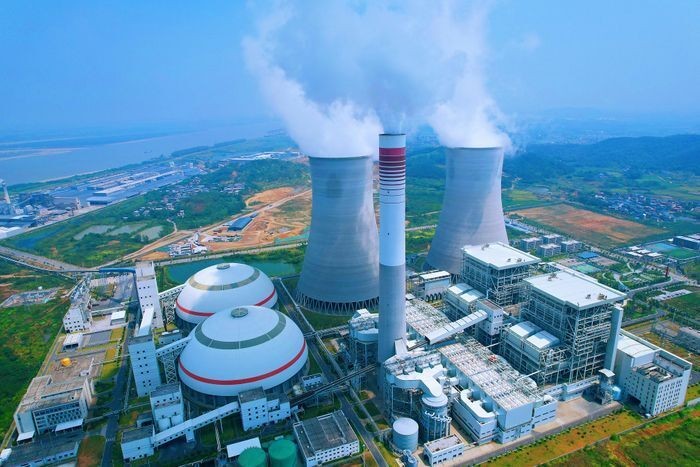
The development of nuclear power is attracting increasing interest from many countries across Asia.
Beyond major economies, emerging nations such as Indonesia, the Philippines, Bangladesh, and Malaysia are also actively exploring nuclear as a viable option. This trend highlights a shift in perception: nuclear energy is no longer an exclusive pursuit of wealthy nations but is increasingly becoming a long-term strategic solution across Asia.
A notable highlight of Asia's nuclear resurgence is the adoption of Small Modular Reactors (SMRs), a next-generation technology poised to transform traditional nuclear deployment, which has often been criticized for being costly and time-consuming.
Masanori Ijichi, a representative of Japan's IHI Corporation, shared that the company has invested in NuScale's SMR technology, the first US design to receive full regulatory approval and achieve commercial viability. He explained that SMRs can serve as decentralized power solutions for remote areas without access to national grids, offering enhanced safety and operational flexibility. This makes SMRs particularly suitable for island nations or regions with challenging terrains across Southeast Asia.
In the same session, Jon Guidroz from Aalo Atomics revealed the company's bold plan to mass-produce 1,000 SMRs annually by 2032, with the first deployment at a US Department of Energy laboratory expected in 2027. He emphasized: "SMRs offer superior safety, site flexibility, and can redefine how we approach nuclear deployment time and cost." This model has attracted the attention of hyperscalers – tech giants with enormous energy demands for data centers.
Three Pillars for Asia's Nuclear Future
Despite the momentum, the return of nuclear still faces significant hurdles. Public perception and trust remain the most formidable barriers, deeply influenced by past incidents like Chernobyl and Fukushima.
Speaking at the conference, Professor Michael Short from the MIT Energy Initiative addressed the inherent trade-offs: "Every technology has risks. But the biggest risk we face is doing nothing." His remarks reflect a growing pragmatism among energy experts: achieving net-zero emissions by mid-century may be impossible without nuclear in the energy mix.
Professor Short presented comparative data showing that, measured by the number of accidents per unit of electricity generated, nuclear power is as safe as, if not safer than, renewable sources like wind and solar. He also highlighted the passive safety systems in modern SMR designs, which can automatically cool down and shut down reactors without human intervention or external power sources, enhancing resilience.
 The Energy Asia 2025 forum also brought together leading technology companies committed to promoting sustainable energy development.
The forum highlighted that SMRs also allow for smaller emergency planning zones. This opens up the possibility of installing reactors closer to industrial areas or data centers while still meeting stringent safety standards. From an economic perspective, this can reduce electricity transmission costs and support new hybrid energy models combining digital infrastructure with baseload nuclear power.
Financing was another central theme. For many years, nuclear power had been excluded from green finance portfolios due to concerns about waste and safety. However, that's changing. According to experts, major financial institutions are beginning to re-evaluate nuclear's role in decarbonization.
Although ASEAN's classification of sustainable finance still excludes nuclear, speakers agreed that this is only a matter of time. One expert noted, "We are witnessing a positive shift in green capital flows. If fairly evaluated, nuclear can certainly meet ESG (Environmental, Social, Governance) standards."
To fully realize nuclear's potential in Asia, three critical enabling factors must be addressed: transparent communication to rebuild public trust; cross-border regulatory harmonization; and the development of a competitive, region-wide supply chain. These pillars require extensive international cooperation, from technology sharing and human resource training to collaborative R&D.
More importantly, experts at the forum emphasized that nuclear energy is not just about electricity. With stable high-temperature output and 24/7 reliability, nuclear can support green hydrogen production, large-scale desalination, industrial heat applications, and nuclear medicine. These additional benefits increase nuclear's value and interdisciplinary relevance in Asia's complex energy transition.
With its large population, rapid industrialization, and surging energy demands, Asia likely faces the world's most complex energy equation. While renewables remain weather-dependent, nuclear power stands out as a sustainable, low-emission baseload option – offering a reliable bridge between today's high-carbon systems and tomorrow's low-carbon future.
If deployed transparently and integrated with advanced technologies, nuclear energy can emerge as a cornerstone in Asia's future energy strategy. The nuclear renaissance may be quiet, but it is strategic – and if Asia succeeds, the region's experience could offer a robust blueprint for the global carbon neutrality journey.


